Old Norm
Standardised and simplified model of the average human eye used for the production of standard lenses.

Our unique philosophy
Most lenses are made for the average eye. They are manufactured using a standard vision test with just four standard prescription values as input for the lens calculation process.
Yet no two eyes are the same. In fact, the entire visual system is as unique as a fingerprint.
At Rodenstock, we recognise people as individuals, with eyes of different shapes and sizes. That's why we use thousands of data points to measure and determine the biometric parameters of the eye and use this data to produce customised high-precision lenses.
Our ambition that we at Rodenstock have had since the launch of our B.I.G. VISION® philosophy:
To create a B.I.G. VISION® FOR ALL.

Today, most progressive lens manufacturers produce lenses using a standard eye model. But these standard values suit only 2% of eyes. This has consequences for how precisely the lens can be tailored to the needs of the customer's eyes.
At Rodenstock, our great vision is sharpest vision for all spectacle wearers. That's why we created lenses that are adapted to the individual biometry of the eyes through innovative technologies – because every eye is different.

Our vision consists of two subsystems that simultaneously work together with the brain: focus vision and peripheral vision. We use our peripheral vision to orientate ourselves and to detect motion in our environment.
When the brain picks up on a point of interest, our focus vision gives the brain more detailed visual information. The brain then determines the next action.

The continuous movement of the eyes requires that lenses provide the right support to the wearer to have a harmonious interplay of focus and peripherical vision.
This constant dynamic state of our vision underscores the importance of choosing lenses that provide the right support for the brain.
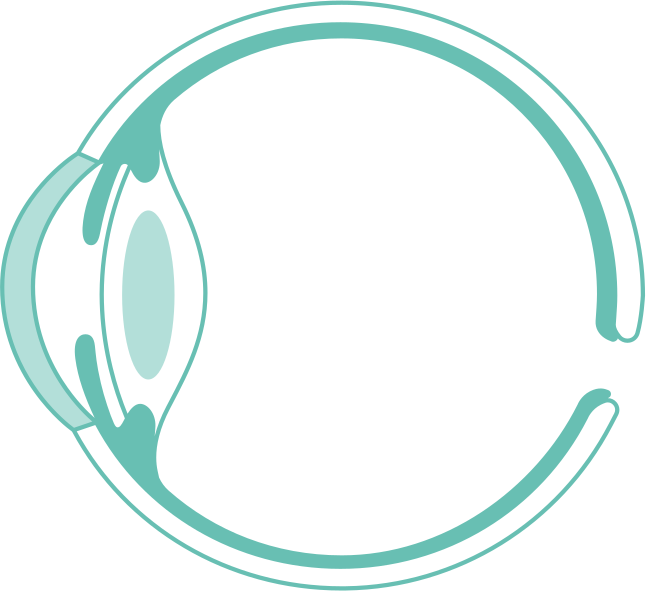
As light travels through the eye, it is refracted to hit the fovea centralis and form a sharp image on the retina.
All elements the light passes through play central roles in creating vision. Since they have different refractive indexes, each must be determined precisely.

At Rodenstock, we are constantly striving to pioneer how precisely lenses can be crafted. Our researchers constantly push the boundaries of what is possible.
Reaching a whole new level of biometric precision has taken us many years. Here are some of the challenges we faced on our journey to B.I.G. VISION®.

Traditionally, progressive lenses are manufactured using input from standard prescription values. To realise our ambition, we needed more precise data on the biometric parameters of the eye. This led us to the launch of our DNEye® Scanner, which was the first step towards attaining true biometric precision.
With the DNEye® Scanner, we were able to scan thousands of data points in each individual eye. From these data points we were then able to successfully build a set of more than 80 biometric eye parameters.

The next major challenge was to unlock the value of our biometric parameters. For thousands of hours we worked with advanced mathematical modelling, constantly pushing the scientific boundaries of lens calculation to transform the more than 80 biometric eye parameters into concrete input for the lens calculation process.
In the end, we were able to create a complete biometric model of the individual eye. This biometric eye model enables us to precisely hit the sharp vision centre of every individual eye.

With this biometric model, we were ready to take on the final challenge: Transferring the biometric parameters directly into the crafting of the lenses. Contrary to the rest of the industry, where biometric data is often measured yet seldom used in lens manufacturing, our biometric eye model provided us with concrete input we could use to manufacture our lenses.
To make use of the biometric eye model’s precision in creating progressive lenses, we engineered a way to digitally transfer the input from the DNEye® Scanner into the crafting of the lens.

The result
Our Philosophy B.I.G. VISION® FOR ALL recognises that every person and eye is different.
With the introduction of B.I.G. VISION® lenses, Rodenstock set new benchmarks in the optical Industry. A true milestone: the world's most precise lenses based on an exact biometric eye model and therefore the sharpest vision.

As unique as a fingerprint
B.I.G. EXACT® Sensitive
B.I.G. Exact® Sensitive lenses are the first and only lenses that combine the eyes' precise biometry with how the brain perceives visual information.
The result is seamless, natural vision that feels like the best version of the wearer's sight.

With our AI technology, we at Rodenstock are able to offer biometric lenses to all varifocal glasses wearers.

Do you want to learn more about B.I.G. VISION®? We are happy to advise you on Rodenstock lens innovations.

Vous êtes opticien·ne et souhaitez collaborer avec Rodenstock ? Nous vous conseillons volontiers.
With B.I.G. VISION®, Rodenstock introduced lenses crafted using precise biometric eye data, thereby setting a new standard in individualised vision correction.
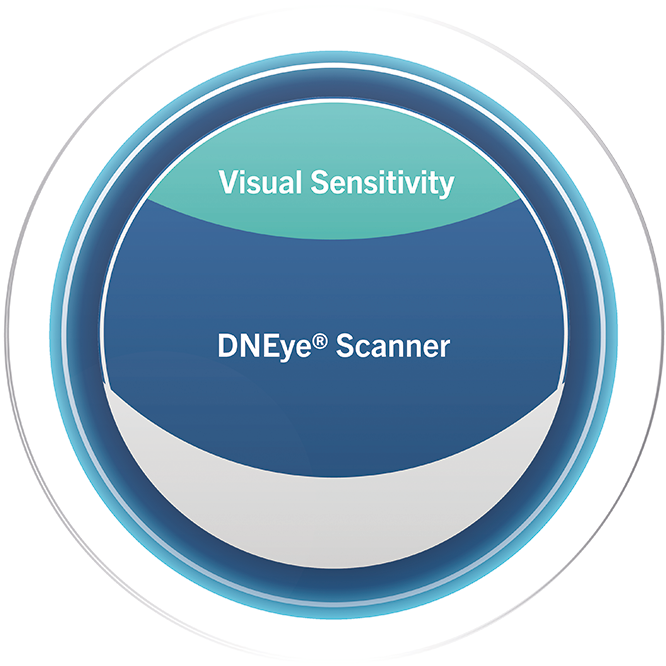
Now, we’re going beyond biometry: B.I.G. EXACT® Sensitive adds on each person’s unique visual sensitivity in the lens design, unlocking a new level of precision, comfort, and natural vision support.



Swipe to enhance biometric individualization with our technology

Increasing biometric individualisation