Old Norm
Standardised and simplified model of the average human eye used for the production of standard lenses.

Our unique philosophy
Most lenses are made for the average eye. They are manufactured using a standard vision test with just four standard prescription values as input for the lens calculation process.
Yet no two eyes are the same. In fact, the entire visual system is as unique as a fingerprint.
At Rodenstock, we recognise people as individuals, with eyes of different shapes and sizes. That's why we use thousands of data points to measure and determine the biometric parameters of the eye and use this data to produce customised high-precision lenses.
Our ambition that we at Rodenstock have had since the launch of our B.I.G. VISION® philosophy:
To create a B.I.G. VISION® FOR ALL.

Today, most progressive lens manufacturers produce lenses using a standard eye model. But these standard values suit only 2% of eyes. This has consequences for how precisely the lens can be tailored to the needs of the customer's eyes.
At Rodenstock, our great vision is sharpest vision for all spectacle wearers. That's why we created lenses that are adapted to the individual biometry of the eyes through innovative technologies – because every eye is different.

Our vision consists of two subsystems that simultaneously work together with the brain: focus vision and peripheral vision. We use our peripheral vision to orientate ourselves and to detect motion in our environment.
When the brain picks up on a point of interest, our focus vision gives the brain more detailed visual information. The brain then determines the next action.

The continuous movement of the eyes requires that lenses provide the right support to the wearer to have a harmonious interplay of focus and peripherical vision.
This constant dynamic state of our vision underscores the importance of choosing lenses that provide the right support for the brain.
As light travels through the eye, it is refracted to hit the fovea centralis and form a sharp image on the retina.
All elements the light passes through play central roles in creating vision. Since they have different refractive indexes, each must be determined precisely.

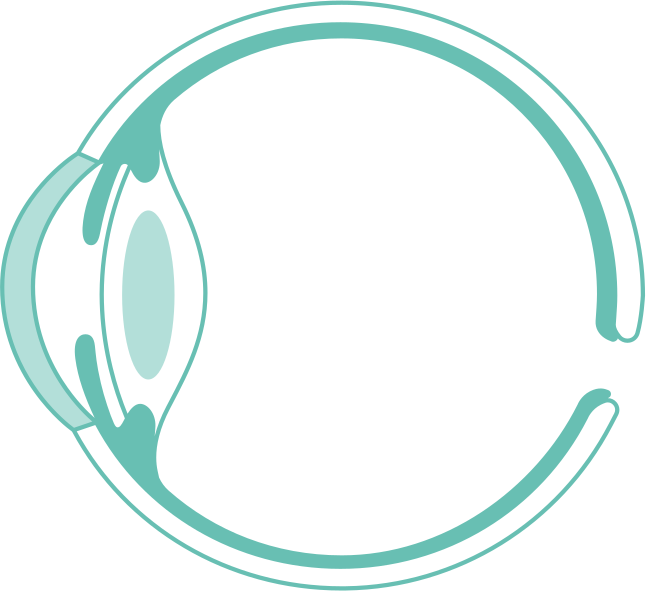
At Rodenstock, we are constantly striving to pioneer how precisely lenses can be crafted. Our researchers constantly push the boundaries of what is possible.
Reaching a whole new level of biometric precision has taken us many years. Here are some of the challenges we faced on our journey to B.I.G. VISION®.

Um unser Ziel zu erreichen, benötigten wir genauere Daten zu den biometrischen Parametern des Auges. Dies führte zur Markteinführung unseres DNEye® Scanners, mit dem wir in der Lage sind, mehrere tausend Datenpunkte in jedem einzelnen Auge zu erfassen. Aus diesen Datenpunkten konnten wir dann erfolgreich einen Satz von über 80 biometrischen Augenparametern erstellen.

Die nächste große Herausforderung bestand darin, den Nutzwert unserer biometrischen Parameter zu erschließen. Wir haben mehrere tausend Stunden an hochentwickelten mathematischen Modellierungen gearbeitet. Dabei wurden ständig die wissenschaftlichen Grenzen der Brillenglasberechnung verschoben, um die über 80 biometrischen Augenparameter in konkrete Informationen für die Brillenglasproduktion zu transformieren. Schließlich konnten wir ein allumfassendes biometrisches Modell jedes individuellen Auges erstellen.

Mit diesem biometrischen Modell waren wir bereit, die letzte Herausforderung anzunehmen: Die digitale Übertragung der biometrischen Parameter aus unserem DNEye®Scanner direkt in die Glasproduktion. Im Gegensatz zu den in der Branche üblichen Verfahren, bei denen biometrische Daten zwar gelegentlich gemessen, aber nur selten in der Brillenglasfertigung verwendet werden, konnte uns unser biometrisches Augenmodell konkrete Informationen für den Herstellungsprozess von Brillengläsern liefern.

The result
Our Philosophy B.I.G. VISION® FOR ALL recognises that every person and eye is different.
With the introduction of B.I.G. VISION® lenses, Rodenstock set new benchmarks in the optical Industry. A true milestone: the world's most precise lenses based on an exact biometric eye model and therefore the sharpest vision.

As unique as a fingerprint
B.I.G. EXACT® Sensitive
B.I.G. Exact® Sensitive lenses are the first and only lenses that combine the eyes' precise biometry with how the brain perceives visual information.
The result is seamless, natural vision that feels like the best version of the wearer's sight.

Mit unserer KI-Technologie sind wir von Rodenstock nun in der Lage, allen Gleitsichtbrillenträgern biometrische Brillengläser anzubieten. Wir nennen diese neuen Gläser: B.I.G. NORM®.

Do you want to learn more about B.I.G. VISION®? We are happy to advise you on Rodenstock lens innovations.

Sie sind Optiker und möchten mit Rodenstock zusammenarbeiten? Wir beraten Sie gern.
With B.I.G. VISION®, Rodenstock introduced lenses crafted using precise biometric eye data, thereby setting a new standard in individualised vision correction.
Now, we’re going beyond biometry: B.I.G. EXACT® Sensitive adds on each person’s unique visual sensitivity in the lens design, unlocking a new level of precision, comfort, and natural vision support.


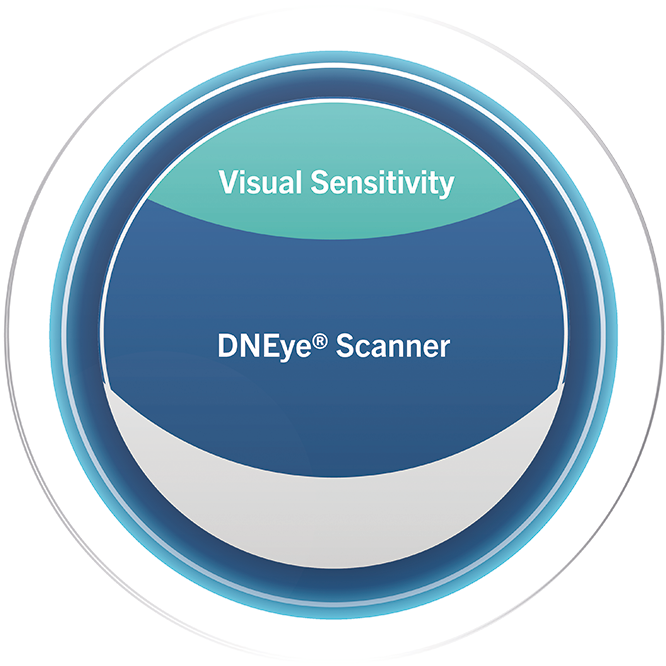


Swipe to enhance biometric individualization with our technology

Increasing biometric individualisation